If you’re new to miles, you’ve probably tried to work out whether a fee, a card, or a promo is worth it, and given up halfway through the maths. I built a calculator for that. It answers the questions I get asked most, and does the maths for you instantly.
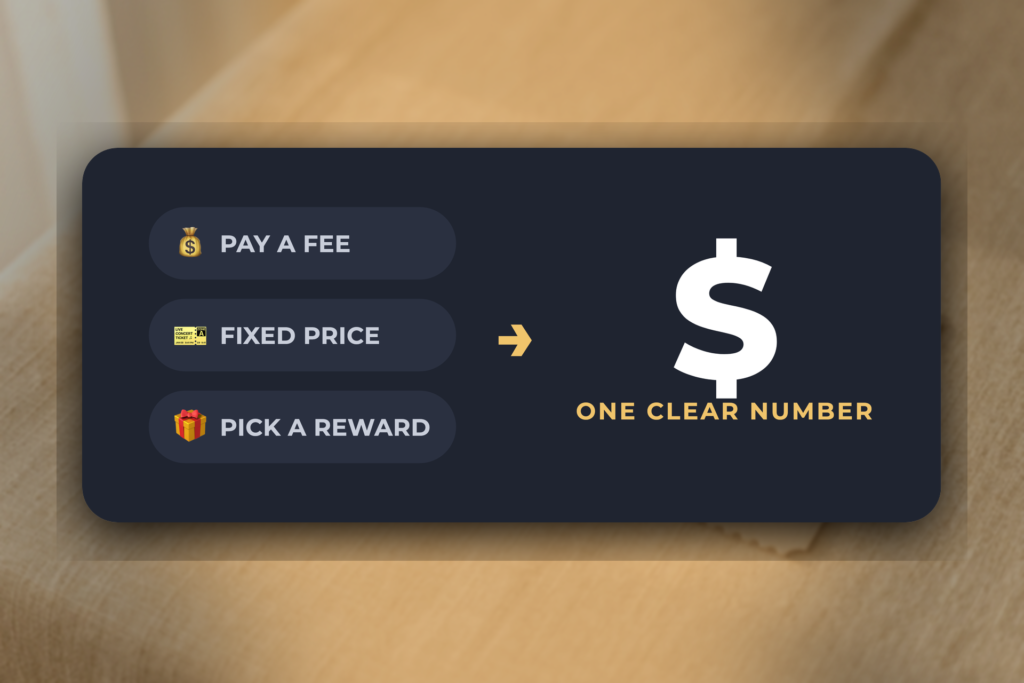
Question 1: Is paying this fee worth it for the miles?
CardUp, Citi PayAll and similar platforms let you pay rent, tax or insurance on a credit card, for a fee — so the bill itself earns miles. I’ve covered the cheapest ways to do this before. The miles are only worth earning if the fee costs less than they’re worth.
Everyone has a different miles valuation. So the question is: does this fee, divided by your card’s earn rate, come in under your miles valuation?
These platforms don’t all work the same way, though. CardUp charges the bill and the fee as one combined amount to your card, and that fee earns miles too. Citi PayAll charges the same way, but Citi excludes the fee itself from miles. The calculator has a toggle for this — check your platform if you’re not sure.
CardUp’s fee is currently 2.3% to 2.9%. Say my card earns 1.4 miles per dollar — at the top of that range, and with the fee itself earning miles, the cost works out to roughly 2.9 ÷ (1.029 × 1.4) = 2.01 cents per mile, still above my 1.25-1.5-cent ceiling. Not worth it on that card. A lower fee brings the cost per mile down, and could make the deal worthwhile. Use the “I’m paying a fee to earn miles” tab above for your own numbers.
Question 2: Is paying this fixed price worth it for the miles?
Sometimes there’s no percentage at all — just a flat price and a mile count. A card’s annual fee can come with a fixed batch of bonus miles attached, independent of how much you spend; some programmes also sell miles directly at a set price. The maths is simpler here: cost divided by miles. The same ceiling applies — above 1.25 to 1.5 cents per mile, it isn’t worth it. Use the “I’m paying a fixed price for miles” tab for this one, with your own numbers.
Question 3: Cash, voucher, or points — which do I take?
Sign-up promos often let you pick your reward — cash, a voucher, or points. Use this calculator’s “A promo lets me choose my reward” tab to compare the options.
Cash is already in dollars. A voucher’s value depends on what you’ll realistically use. Points need converting to miles first.
I cover 12 verified miles programmes — DBS, UOB UNI$, Citi ThankYou, Citi Miles, HSBC, OCBC 90°N, OCBC$, SC 360°, KrisFlyer UOB, Maybank TREATS, yuu, and HeyMax. Each has its own ratio to KrisFlyer built in — pick your bank and the conversion happens automatically.
HeyMax is the exception: Max Miles convert to a different rate depending on which airline you transfer to, so there’s no single fair ratio. Instead the calculator uses HeyMax’s own direct cash-out floor — S$0.018 per Max Mile via FlyAnywhere — as a conservative baseline; a good flight redemption can still be worth more.
Converting to a different airline instead — EVA Air’s Infinity MileageLands, Avios, or another? Pick “Other / not sure” under “Which points are these?” and key in your own ratio.
Make the default number yours
My 1.25–1.5-cent benchmark is built on business-class redemptions. If I only ever redeem economy, that band can overstate what my miles are worth to me — or understate it, depending on the route.
That’s why the calculator doesn’t fix the number. It defaults to a conservative 1.25 cents, but you can change the miles valuation field at the top of any tab to your own number — every answer above updates around it, not mine.
Three real questions from the Telegram chat
“Does it still make sense to use iPayMy for an annual insurance premium?”
Tab 1. iPayMy on Mastercard is currently 2.85%. On a 1.4 mpd card, that’s 2.85 ÷ (1.0285 × 1.4) = 1.98 cents per mile — above my ceiling on its own.
“Should I pay the S$196.20 annual fee for 10,000 renewal miles on DBS Altitude, or ask for the waiver?”
Tab 2. S$196.20 ÷ 10,000 miles = 1.96 cents per mile, above my ceiling. On miles value alone, ask for the waiver if you’re eligible — paying just to keep the miles isn’t worth it on this math.
“How do you work out if 25,000 Max Miles beats S$400 cash?”
Tab 3. HeyMax Max Miles have their own direct cash out — S$0.018 per Max Mile via FlyAnywhere — so 25,000 Max Miles = S$450, more than the S$400 cash. The miles win here.
Try it below — a tab for each question above, plus the valuation field to make it yours.
Is it worth it? Miles Calculator
Convert miles, points and vouchers into their dollar value — and see whether a deal is worth taking.
New to miles? A quick primer
Airline miles are a currency — you earn them on card spend and pay for flights with them. Audz's benchmark: 1 mile ≈ 1.25–1.5¢ (based on business-class redemptions; this calculator defaults to the conservative 1.25¢). A fee for miles is worth paying only if each mile costs less than that.
The platform shows this before you pay — e.g. CardUp's fee is around 2–3%.
Known as "mpd" (miles per dollar) — listed on your card's product page. Select a common rate or enter your own.
Platforms differ. CardUp charges (bill + fee) as one amount, and the fee earns miles too. Citi PayAll charges the same way, but Citi excludes the fee from miles — check your platform if unsure.
The annual fee, or the price of the miles purchase.
Add each reward the promo offers (up to 3) — everything gets converted to dollars.
Reference: Audz values a mile at 1.25–1.5¢, based on business-class redemptions. Adjust this to your own valuation.
💳 Credit cards change their T&Cs every so often and it’s difficult to stay updated. That’s why I created a Telegram Broadcast where you can receive timely bite-sized updates.