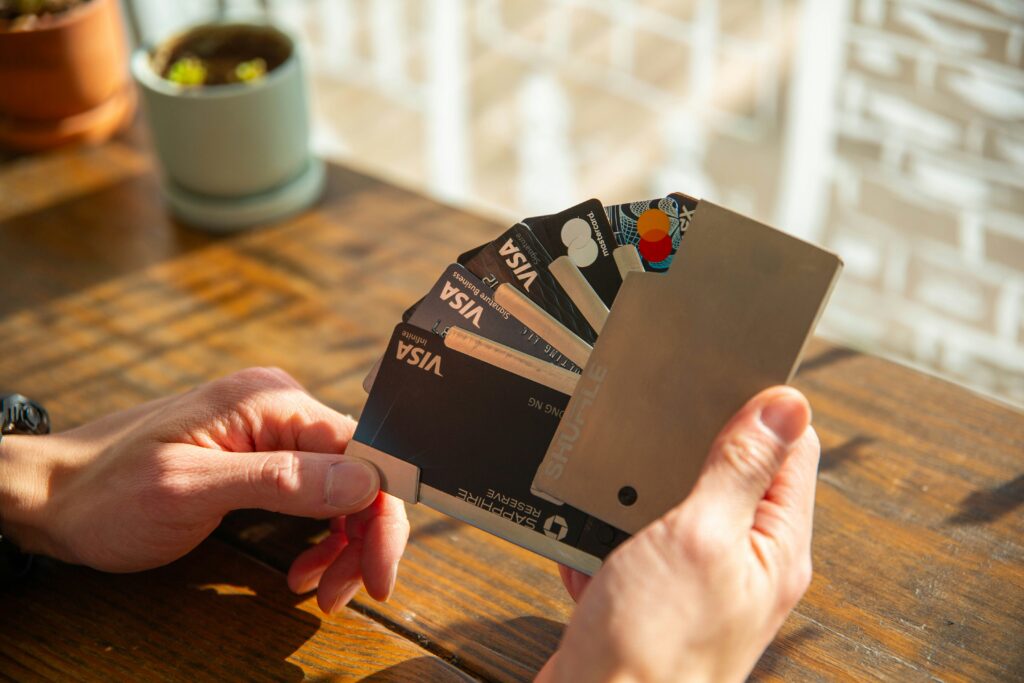
Credit cards can be powerful financial tools — offering cashback, miles, perks, and flexibility — but their benefits only show when used responsibly. So how many cards should you have? There’s no one-size-fits-all answer. The right number depends on your spending habits, discipline in tracking payments, and the rewards you want to optimise.
It’s also worth noting that a credit card isn’t essential for financial success. Some people prefer to avoid them altogether, using cash or debit for simpler budgeting and to eliminate interest risk. Others see credit cards as useful tools that provide convenience and rewards when managed well.
Is There a Recommended Number? The Short Answer
Most guides and experienced cardholders generally agree on one thing: there is no “ideal” number that applies to everyone. That said, there is a commonly observed practical range.
- 1 card is sufficient to build a credit history and handle basic spending.
- 2–3 cards is where most people find a balance between simplicity and reward optimisation.
- 3–4 cards suits those who are comfortable tracking spending and want to maximise cashback or miles.
- 5 or more cards is generally only suitable for highly organised users who actively manage rewards and fees.
The key principle is not maximising the number of cards, but maximising the value you get from the cards you own.
Starting Small: Why One or Two Cards Are Often Enough
For beginners or those who prefer simplicity, starting with one or two credit cards is often the most sensible approach. At this stage, the focus should be on developing good credit habits rather than chasing rewards aggressively.
With one card, you can:
- Build a consistent payment history
- Learn how billing cycles and due dates work
- Avoid the complexity of juggling multiple accounts
Adding a second card can make sense once you identify a clear use case, such as:
- One card for everyday spending like groceries and transport
- A second card for a high-reward category such as dining, online shopping, or travel
This setup provides flexibility and backup without significantly increasing management effort.
Miles Cards vs Cashback: How To Choose
Criteria | Cashback Cards | Miles Cards |
Best For | Consistent everyday spenders across multiple categories (groceries, dining, bills, transport) | People with larger or planned spending (e.g. flights, big-ticket purchases, overseas spend) |
Expiry & Tracking | No expiry — cashback is straightforward and easy to track | Miles may expire and require tracking; choosing the right airline or card matters |
Minimum Spend & Spend Cap | Cards with high earn rates usually require a minimum monthly spend and may come with cashback caps | Cards with high earn rates often has no minimum spend, but may have category caps or bonus limits |
Planning Required | Minimal planning — cashback is earned and used immediately | Requires planning for flight redemptions or flexibility with travel dates |
Main Benefit | Earn cash rebates that can offset bills or even earn interest in your bank account | Earn miles for premium travel experiences (e.g. business or first class flights) |
Ease of Use | Simple — one card can cover most spending; ideal if you’re busy or hands-off | Requires more effort — tracking miles, managing expiry, and choosing the right cards |
Optimisation Strategy | Works best when paired with a single main card or accounts like OCBC 360 to boost interest | Best optimised with multiple cards (3–4) to maximise miles earning across categories |
Why Many People Hold More Than One Card
As spending patterns become clearer and confidence grows, many cardholders find value in holding multiple cards. This is where credit cards shift from being just payment tools to reward-optimisation tools.
Having multiple cards can help you:
- Earn higher cashback or miles by matching spending categories to the best card
- Spread spending across cards, which may help keep credit utilisation lower
- Rely on a backup card if one is declined or temporarily unavailable
A common structure for multi-card users looks like this:
- One general spending card for transactions that don’t fall into bonus categories
- One or two specialised cards for dining, online spending, or travel
- An optional backup card with no annual fee
Challenges of Managing Multiple Credit Cards
Having several credit cards provide convenience, security, and financial perks like rewards or cashback, while helping build a strong credit history. But unless managed responsibly, it can be challenging to:
- Keep track of multiple payment due dates
- Review monthly statements for unauthorised or incorrect charges
- Monitor reward balances, such as miles that may expire
- Notice annual fees that may be charged without immediate awareness
How to Manage Your Cards for a Strong Credit Score
The number of credit cards you hold can influence your credit score, but more cards do not automatically mean better credit. What matters most is how you manage them.
Pay every bill in full and on time
Payment history has the biggest impact on your credit score. One well-managed card is better than several poorly managed ones.
Keep credit utilisation low
Spreading spending across a small number of cards can help keep utilisation low, but only if you can track balances easily. If more cards make management difficult, fewer may be better.
Avoid opening cards too quickly
Frequent applications can hurt your score in the short term. Adding a new card should serve a clear purpose, not just increase your card count.
The “right” number of credit cards is one you can manage confidently while maintaining good credit habits. If adding another card makes tracking payments or rewards harder, it may work against both your credit score and your finances.
So, how many should you actually have?
Rather than choosing a number upfront, it is more effective to work backwards from your behaviour.
Ask yourself:
- Will I be able to pay my bills in full and on time?
- Do I know which categories I spend the most on each month?
- Am I actively earning meaningful rewards from each card I own?
If a card no longer serves a clear purpose or requires effort to justify its annual fee, it may be time to close it.
To understand which credit card would fit your financial level, read this guide:
Final Thoughts:
Having a credit card is optional, possessing multiple credit cards is a strategy, and having too many without discipline is a risk.
Ultimately, the right number of credit cards is the number you can track confidently, pay off in full every month, and use intentionally to support your financial goals
Credit cards should simplify your financial life and enhance your spending — not complicate it. If they stop doing that, it’s not a signal to get more cards, but to reassess the ones you already have.