What Is Cardup/iPayMy?
CardUp and iPayMy are third-party services that let you pay big bills with your credit card—even when your merchant doesn’t normally accept cards. They charge your card (plus a small fee) and then transfer the money directly to your payee, e.g. IRAS, your landlord, or your insurance company.
Supported Payments:
- Rental Fees, Rental Deposit, Condominium Maintenance Fees
- Tuition/School fees
- Insurance Premiums
- Income Tax, Property Tax
- Stamp Duty
- Car Loans, Mortgage Loans, Season Parking
- Utilities
- Helper Salary (foreign domestic workers)
- Suppliers (applicable to CardUp for business)
- Payroll (applicable to CardUp for business)
- Corporate Tax (applicable to CardUp for business)
How It Works (Simple Breakdown)
- CardUp/iPayMy charges your credit card for the payment amount + service fee.
- They transfer the full payment to your recipient.
- You earn miles or cashback on your credit card for a payment you otherwise couldn’t.
Optimisation Strategy
The core strategy is to always maximize the new user rewards first.
- CardUp: Use code NICHOLASN116 for S$30 off your first payment (best for ~S$1,154 payment).
If you’re making a larger payment, use codeLOBANGSISto get a 1.79% fee on up to S$5,000 (Visa cards only; best with UOB PRVI Miles Visa). - iPayMy: Sign up via this link to get $30 off code (best for S$1,250 payment).
Pro tip: Split a large payment (e.g. S$6,250 insurance) into:
S$5,000 with CardUp using
LOBANGSISS$1,250 with iPayMy referral link above
That way, you maximise both discounts.
When Is It Worth Paying the Fee?
Since CardUp and iPayMy charge a service fee, you need to work out whether the rewards you’re earning are really worth the cost.
A. If You’re Collecting Miles → Calculate Cost Per Mile (CPM)
For miles redemptions, this comes down to calculating your Cost Per Mile (CPM) and comparing it against simply paying for the flight in cash.
Step 1: Calculate Your Cost Per Mile (CPM)
Example: Paying S$1,000 through CardUp at a 1.79% fee with a 1.4 mpd card (UOB PRVI Miles Visa):
Service Fee: S$1,000 × 1.79% = S$17.90
Miles Earned: S$1,000 × (1 + 0.0179) × 1.4 = 1,425 miles
Cost Per Mile: S$17.90 ÷ 1,425 = 1.26¢ per mile
Most people set their ceiling at 1.25–1.5¢ per mile. Anything higher, and it’s usually not worth buying miles this way.
Step 2: Compare With the Cash Price of the Flight
Singapore–San Francisco (return) on Singapore Airlines:
Economy Saver (88,000 miles + S$95 tax):
Costs ~S$1,178 vs. S$986 cash →Not worth it.
Business Saver (225,000 miles + S$95 tax):
Costs ~S$2,863 vs. S$5K–10K cash →Looks better… but proceed with caution.
Miles Redemption Value Example (Singapore to San Francisco):
Scenario | Calculated Cost (Miles + Tax) | Cash Price (based on google search) | Worthwhile? |
Two-way Economy Saver Award Ticket on Krisflyer Portal | (44,000 miles x 2 way) x 1.23 cents per mile + S$95.50 (taxes) = S$1,177.90 | S$986 | No. You pay more with miles than if you use cash |
Two-way Business Saver Award Ticket on Krisflyer Portal | [(112,500 miles x 2 way) x 1.23 cents per mile] + S$95.50 (taxes) = S$2,863 | S$5K – S$10K | Yes. You pay less with miles than if you use cash. However, be careful of value trap (more on that below) |
The Value Trap
A sky-high cash price for business class can make a redemption look like an amazing deal. But that doesn’t always reflect real value.
A good question to ask yourself:
Would I actually pay S$2,863 in cash for a return business class ticket to San Francisco… when economy on the same route costs just S$986? If the answer is yes, then your miles purchased via Cardup or iPayMy is worthwhile.
Bottom Line:
- Economy redemptions? Almost never worth it.
- Business/First Saver redemptions? Worthwhile—but only if you’d realistically pay for that upgrade.
Rule of thumb: Use CardUp/iPayMy for Business Class (and above), and avoid the value trap.
(Note: Amex cards excluded)
Highest Earn Rate Miles Card With Waivable Annual Fee
UOB PRVI Card
Earn 1.4 miles per dollar on local spend and up to 3 miles per dollar on foreign currency spend
4 Priority Pass visits per calendar year
Highest Earn Rate Miles Card With Non-Waivable Annual Fee
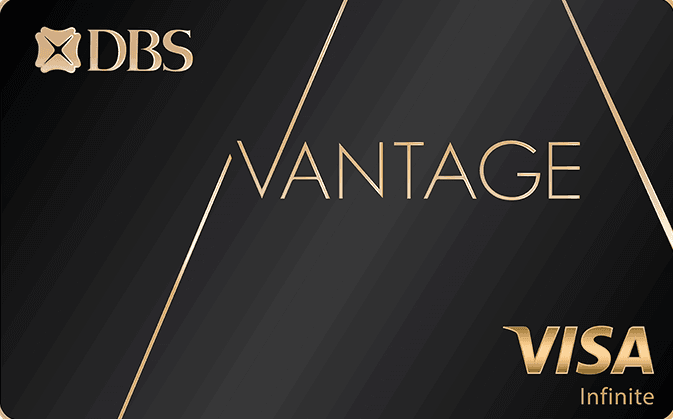
DBS Vantage Card
Earn 1.5 miles per dollar (or 1.5% cashback) on local spend, 2.2 miles per dollar (or 2.2% cashback) on foreign currency spend
10 Priority Pass visits per membership year
B. If You’re Collecting Cashback → Check Net Cashback
Formula:
Cashback Rate – Service Fee = Net Cashback
Cashback Cards | Earn Rate | Minumum Spend & Cap | Result (Earn Rate – 1.75% cardup fee) | CardUp | iPayMy |
6% cashback | S$600 min spend; max S$25 cap on online transactions | 4.25% | ✓ | X |
- With the nerf, you can still use CardUp with the Maybank Platinum Visa, but it’s no longer as good. You can only put 30% of the spend on CardUp and need to spend the other 70% on regular purchases to hit the requirement.
Frequently Asked Questions:
Q: Can i use DBS Women’s World Master Card or Citi Rewards or any 3/4 miles per dollar card to do this?
A: No. Only selected cards will earn you miles. The best cards with the highest earn rates are mentioned above in this article already.
Other Known Restrictions by Cardup:
UOB One Card and all HSBC cards do not earn any rewards. Citi Cards cannot be used on car loans or mortgage payments
- Personal AMEX Cards (including those issued by other banks) cannot be used on:
- Car Loans
- Renovation
- Mortgage
- Helper Salary
- Electricity
- Miscellaneous
Step-by-Step Guide for Cardup and iPayMy:
How to pay income tax, insurance, rent, helper’s salary etc with credit card using CardUp:
Sign Up for an account
2. Schedule a payment by selecting the relevant payment type
3. Select the recipient (eg. IRAS)
4.Fill out details such as payment amount, choose the card and select “Standard payment“
5. Schedule a monthly recurring payment (more on that later)
6. Key in your IC Number, enter promo code below and click “Continue”:
- For new users, use code: NICHOLASN116 for S$30 off your first payment to maximise your rewards, or if you have large payments, use code “LOBANGSIS” to get discounted 1.79% fee on up to S$5K on your first payment with a Visa card
7. Submit your documents
- Statement of Account showing your Name, NRIC, Outstanding balance and Date of outstanding balance
After all that, you’re good to go!
- Some photos and Information are from cardup.co
Your dashboard will show the scheduled payments like this:
How to pay with credit card using iPayMy:
Sign Up for an account on iPayMy to get S$30 off
On the dashboard’s upper right, click “Make a Payment”, then select the relevant payment type
3. Enter the details
4. Choose the Schedule Type whether One-Time or Recurring
5. Choose your Payment Date, but note that your card will be charged a few days earlier
6. On the Payment Details screen, you’ll choose the saved credit card you’d like to use, and the standard ipaymy fee of 2.4% will be shown.
7. If you signed up via my referral link, you should have an email (check spam/junk mail) that looks like this, with the promo code that you should enter.
8. Once you applied the code, you should see S$30 deducted off the service fee. Make sure the fee (2.4%) portion is ZERO before proceeding.
💳 Credit cards change their T&Cs every so often and it is difficult to stay updated. That’s why I created a Telegram Broadcast where you can receive timely bite-sized updates to get the most out of your spending.
💡 We believe in always paying our credit card bills on time and in full. It is only by doing that, can we fully maximise our credit card benefits.